











Taken AI Courses —
But Has Your Career Actually Changed?

Short courses teach you the tools. But deeper AI mastery and a recognised credential take your career further.

An experienced professional at his workstation, with course certificates and AI tool screens around him and strategic dashboards visible behind
Move Beyond AI ToolsBuild Next-Level Career Capability

You've tried ChatGPT. You've attended AI workshops. Perhaps you've already collected a few AI certificates.

But as AI tools become easier for everyone to use, knowing the latest tool alone becomes less differentiating.

Build deeper postgraduate-level capability across Data Science, AI systems, autonomous agents, foundation models, governance and applied AI.

Is this you?

Four sentences that sound familiar.

  • You've hit a promotion ceiling in the role you're in now.
  • You need a recognised postgraduate qualification, but you can't commit two or three years of evenings.
  • You want practical capability taught by industry practitioners — not pure academic theory.
  • You've collected the short AI courses, and you're still sitting in the same seat.

If you recognised two or more, the rest of this page was written for you.

Approx. 30 seconds

The problem

The short-course cycle can build familiarity. It rarely builds depth on its own.

  1. Attend an AI workshop
  2. Learn some prompts
  3. Try ChatGPT or Copilot
  4. Earn another certificate
  5. Return to the same role

Short AI courses can be useful for learning tools.

The limitation is expecting a tool-based course to create a career-level transformation on its own.

Employers increasingly need professionals who can:

  • evaluate AI-generated insights
  • understand data and models
  • work with technical teams
  • assess AI risks and govern AI responsibly
  • apply AI to real organisational problems

AI is becoming a baseline

As tools become easier to use, tool familiarity alone becomes less differentiating.

“I know how to use AI”

is becoming a baseline.

“I know how to evaluate, apply and govern AI in my field”

is a stronger professional proposition.

Why building depth matters

There may be no single moment that signals it. Over time, the difference can appear in how readily you can contribute to AI-enabled work and evidence your capability.

  1. When promotion or project opportunities arise, employers may look for people who can demonstrate capability — not just tool exposure.
  2. Market conditions and individual outcomes vary, but deeper capability can broaden the roles and projects you are equipped to consider.
  3. As AI becomes more embedded in workplace software, the expectations placed on professionals continue to evolve.

The next ten months can be a chance to build capabilities that support the direction you want to take.

The opportunity

Build on the experience you have already earned.

Add AI to it.

Your existing experience in finance, healthcare, government, operations, technology, consulting, logistics or another field does not become obsolete because AI is growing.

It can become more valuable when combined with deeper Data Science and AI capability.

+Your Domain Experience
+Data & AI Capability
+Governance & Risk Understanding
+Business Application
The result A More Future-Ready Professional

Examples of how experience combines with AI:

Finance + AI

Forecasting, fraud detection, risk models

Healthcare + AI

Patient data insights, operational efficiency

Government + AI

Policy analytics, responsible AI governance

Technology + AI

Intelligent systems, AI security

Operations + AI

Demand planning, process automation

Consulting + AI

AI strategy and adoption advisory

Don't restart your career.

Add AI to the expertise you've already built.

The programme

A 10-month Master’s designed around your working life

The programme

Master of Technology in Data Science & Artificial Intelligence

University of Chichester, England · Delivered by Aventis Graduate School, Singapore

Instant PDF · Curriculum, fees & admission requirements

  • 10 Months Part-Time
  • Live Zoom
  • 100% Coursework
  • No Exams
  • 6 Modules + Capstone

Programme at a glance

Jan 2027 Intake

Applications are open now for the January 2027 cohort.

10 Months Part-Time

Two consecutive weekends per month — Saturday and Sunday, 9:00am to 5:00pm, live on Zoom, alongside your job.

100% Coursework

Assessment is entirely coursework. There are no examinations.

The evidence

What the market — and our graduates — say.

Over 70% of our graduates successfully pivot to a new career or secure a promotion within six months of completing their Master's.Graduate Employment Survey 2025
S$122,500 average annual salary of Data Science & AI professionals in Singapore.Market data cited in the programme brochure
74% of business leaders were planning to hire for tech-heavy roles within two years.Randstad job market report, cited in the programme brochure

Salary benchmarks published in the brochure

S$90,000Graduate AI
S$100,000Junior Data Scientist
S$120,000Data Scientist
S$180,000Principal Data Scientist

Market salary data for Singapore roles, as published in the programme brochure. These are market benchmarks, not a promise of earnings — individual outcomes depend on experience, capability and market conditions.

Industry partners and professional bodies

AmCham Singapore AI Singapore AI Vision Fund e2i, Employment and Employability Institute Singapore Nurses Association International Association for Counselling SAFRA SGInnovate SHRM recertification provider UN Global Compact Network Singapore UTAP, Union Training Assistance Programme

In their own words

Aventis alumni on what a Master's did for them.

Thank you Aventis Graduate School for organising great events for career opportunities in frontier technologies. The master's programmes in these technologies is helping cyber professionals to grow in their careers.

Mr. Ajay Kumar Regional Head — Cyber Security and Risk Management Services, CrowdStrike Class of 2022 · Aventis Graduate School alumnus

Glad to have received my award after long grueling months of doing assignments and dissertation. Thank you Aventis Graduate School. Thanks to my lecturers, mentors and to my classmates.

I enjoyed the experience of going back to school after so many years, especially our classroom sessions despite the pandemic. The distinction is a bonus! I will study again when I get the chance.

Mr. Christian Macatulad Information Systems Security Analyst, INTERPOL Class of 2022 · Aventis Graduate School alumnus

Testimonials are from Aventis Graduate School alumni across its postgraduate programmes. Individual experiences and outcomes vary.

Aventis graduates celebrating at a convocation ceremony
Aventis graduates at convocation.

Success stories

The people behind the logos.

Two Aventis M.Tech students — both working full-time while they study, and both already applying it in roles at organisations you know.

“Equipped me to navigate AI risks strategically.”

  • Balancing full-time work and international travel, the flexible learning format made continuing education possible.
  • Learned from leading experts through real-world cases, frameworks and tools used across the industry.
  • Gained a deep understanding of AI governance and risk management, and applies those insights immediately at work.

Advancing cyber security through AI and innovation.

  • His M.Tech strengthened his ability to connect emerging technologies with practical business and security challenges.
  • A flexible learning model and industry-relevant curriculum let him deepen his expertise while balancing professional commitments.

Success stories are from Aventis M.Tech students and alumni across its technology programmes. Individual experiences and outcomes vary.

Career outcomes

Our Graduates Work At

Aventis alumni hold senior roles across technology, consulting, banking, healthcare and professional services. This is a sample of the organisations our graduates work for.

Employer names are shown to illustrate the sectors in which Aventis graduates work and do not imply endorsement of the programme by those organisations.

The difference

From tool familiarity to postgraduate capability

Short AI Courses

Tool-focused learning

  • Learn a specific tool
  • Days or weeks
  • Immediate productivity
  • Tool-focused
  • Limited applied depth
  • Certificate of completion

Master of Technology

Postgraduate capability

  • Build structured postgraduate capability
  • 10-month programme
  • Longer-term professional development
  • Systems, data, governance and application
  • Applied projects and Capstone
  • UK Master's degree

Short courses can help you use AI today.

This Master's is designed to help you build capabilities that remain relevant beyond the current tool cycle.

A curriculum built for application

A capability stack for applied AI

The curriculum moves from tools and techniques to systems, governance and application — the foundation for the six advanced modules and Capstone Project that follow.

1

Tools

ChatGPT · Copilot · Gemini · Analytics platforms

2

Techniques

Prompting · Data analysis · Automation · Modelling

3

Systems

Intelligent agents · Foundation models · Decision systems

4

Governance

Risk · Ethics · Compliance · Security · Accountability

5

Application

Solve genuine organisational and business problems.

What you will study

Six Advanced Modules + Capstone Project

Move beyond prompting and AI applications. Develop deeper capabilities across the modern AI landscape.

Module 1

AI for Data-Driven Decision Intelligence

Develop predictive AI models for business and technical decision-making, and learn to communicate what those models actually tell you.

Key learning points

  • develop predictive AI models
  • evaluate model accuracy and interpretability
  • analyse AI-driven insights
  • communicate findings for strategic decisions

Module 2

Intelligent Systems & Autonomous Agents

Understand how AI is moving from answering questions to performing tasks and making decisions.

Key learning points

  • autonomous agents
  • agent-based models
  • reinforcement learning
  • operational and ethical implications

Module 3

Multimodal Foundation Models, AGI Research & Large Language Models

Go beyond basic prompting to examine how modern foundation models actually work.

Key learning points

  • Large Language Models
  • Foundation Models
  • Multimodal AI
  • emerging AGI research

Move from “How do I prompt ChatGPT?” to “How do these systems work and where should organisations apply them?”

Module 4

Risk Management, Governance & Ethical AI

Designed for professionals responsible for how AI is adopted and controlled across an organisation.

Key learning points

  • AI governance
  • ethical AI and regulatory considerations
  • operational risk
  • transparency, accountability and compliance

Module 5

Advanced Topics in Adversarial AI & Defence Strategies

Examine how AI systems are attacked — and how organisations defend them.

Key learning points

  • data poisoning and model manipulation
  • adversarial testing
  • AI vulnerabilities and model robustness
  • defensive AI strategies

Module 6

AI for Threat Intelligence & Malware Analysis

Explore how AI and machine learning can strengthen security operations.

Key learning points

  • threat intelligence
  • malware detection
  • security analytics
  • predictive threat analysis

Capstone Project

Apply Your Learning to a Real-World Challenge

The programme culminates in a substantial Capstone Project — an applied industry project or research investigation into a real organisational, AI, cybersecurity or digital innovation challenge.

Professionals discussing an applied data and AI project at a whiteboard
01

Investigate

Analyse a complex real-world problem.

02

Apply

Use postgraduate-level methodologies and AI concepts.

03

Deliver

Produce professional conclusions, recommendations or solutions.

This is where learning moves from theory into professional application.

Designed around your career — not against it.

Going back to university should not require putting your career on hold. Classes run across two consecutive weekends per module, live on Zoom, so you can keep working while you study.

Assessment is 100% coursework — case studies, projects and applied assignments. There are no examinations.

A working professional attending a live online class in the evening
10 MonthsPart-time
WeekendModular delivery
Live ZoomSaturday & Sunday, 9:00am–5:00pm
100%Coursework
No ExamsPractical assessment only

Learn Alongside Experienced Professionals

Your classmates form part of the learning experience. Professionals in the cohort may come from:

  • Management
  • Technology
  • Finance
  • Government
  • Consulting
  • Healthcare
  • Logistics
  • Manufacturing
  • Education
Working professionals in a postgraduate seminar discussion

Learn From Academics and Industry Practitioners

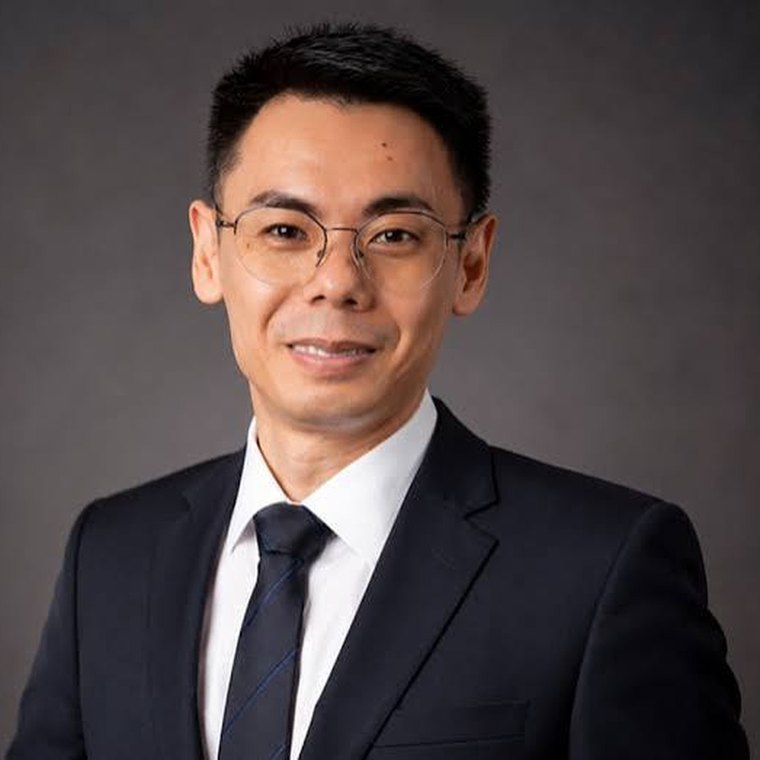
Dr Tan Kian Hua, Chief Information Security Officer at Lenovo PCCW Solutions
Programme faculty · University of Chichester / Aventis Graduate School

Dr Tan Kian Hua

Chief Information Security Officer, Lenovo PCCW Solutions

A highly credentialed cybersecurity and data protection professional, holding the CIPP, CIPM, FIP, CISM, CISA, CDPSE and CEH certifications.

  • 15+ years of experience
  • Cybersecurity governance
  • Risk management
  • Data protection
  • Technology consultancy

Mr Ronald Shiftlet

Master in Technology, DePaul University. Director and Senior Lecturer at Secure Knowledge LLP, with over 20 years in information technology across Europe and Asia.

Dr Luis J. Hall

Master in Big Data and Data Science, IL3, University of Barcelona. Over 20 years of academic and executive education experience in finance and business analytics.

Mr Alvin Lam

MBA, Murdoch University, with executive education from MIT Sloan, Saïd Business School and IBM. Co-founder of AI Vision Fund.

Mr Tan Kwang Hwee (Victor)

PhD, LIGS University. Contributes practitioner perspectives in cybersecurity and data protection.

The programme brings together academic and professional perspectives so working professionals can connect theory with organisational realities.

Earn a UK Master's Degree

Upon successful completion, graduates are awarded the Master of Technology in Data Science & Artificial Intelligence by the University of Chichester, England.

University of Chichester
Awarding university
TEF 2023 · Gold Teaching Excellence Framework — Gold for outstanding teaching and learning
Guardian University Guide 2026 Top 30 UK University
Academic Heritage Established 1839
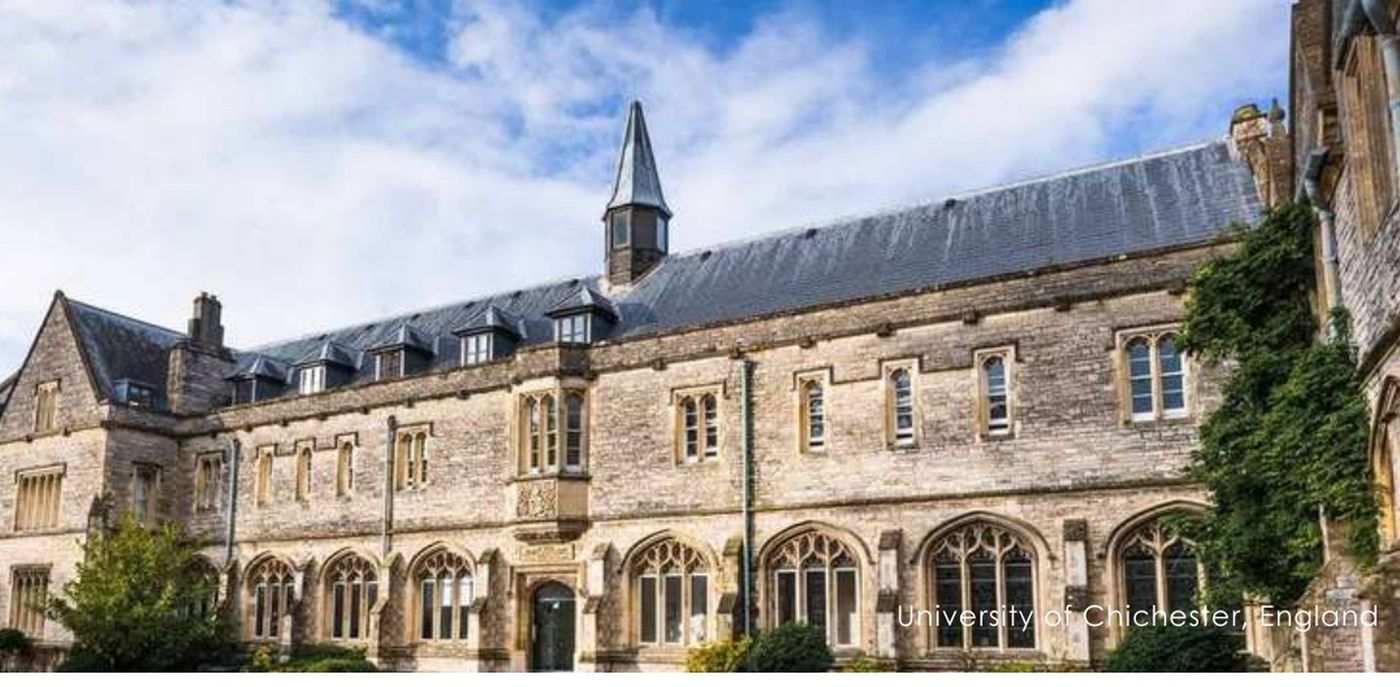
University of Chichester campus building in West Sussex, England
University of Chichester, West Sussex, England · Awarding university

Strengthen Your Career Options

A Master's degree cannot guarantee a promotion, salary increase or career switch.

But structured postgraduate study can strengthen the combination of knowledge, capability, credibility, network and professional positioning you bring to your next opportunity.

  • Knowledge
  • Capability
  • Credibility
  • Network
  • Professional Positioning

Potential Career Directions

Data Scientist
Machine Learning Engineer
AI Architect
Senior ML Engineer
Principal Data Scientist
Head of Technology & Innovation
Principal Consultant
IT Director
Chief Information Officer

Career outcomes depend on experience, capability, technical skills, network and market conditions.

Programme Investment

S$24,800+ GST

Payable across 4 instalments of S$6,200.

A non-refundable application fee of S$200 (subject to GST) applies, and miscellaneous fees may apply.

  • 1st instalment — upon acceptanceS$6,200
  • 2nd instalment — before the 3rd monthS$6,200
  • 3rd instalment — before the 5th monthS$6,200
  • 4th instalment — before the 7th monthS$6,200

Ready to explore the programme in more detail? Download the brochure for the full fee breakdown and curriculum, or chat with a Programme Adviser on WhatsApp for quick guidance.

Download Programme Brochure

Instant PDF

View the curriculum, fee breakdown, instalment schedule, entry requirements and intake details.

Chat with Our Programme Adviser

WhatsApp

Ask about programme fit, admissions, payment options and next steps.

Multiple Entry Pathways

Route 01

Degree Route

Bachelor's degree or equivalent undergraduate qualification in any discipline.

Route 02

Professional Route

Graduate Diploma / Diploma or equivalent, with relevant working experience.

Route 03

Experienced Applicant Route

Applicants aged 30+ with significant work experience but without conventional academic qualifications may be considered case-by-case.

Not sure which route applies to you?

Is This Programme Right For You?

Applicants with a Bachelor's degree or equivalent qualification in any discipline may meet one of the programme's entry pathways.

Professional experience can make postgraduate learning more relevant, because you already understand organisations, teams and business problems.

You are not starting again. You are adding AI capability to your existing experience.

No qualification can guarantee employment. Outcomes depend on experience, capability, technical skills, network and market conditions.

The programme provides structured postgraduate study designed to deepen your understanding and application of AI and Data Science.

Short courses remain useful for specific tools.

This programme is for professionals seeking a more structured, substantial postgraduate education spanning AI systems, data, governance, security and applied work.

The next 10 months will pass either way

You could still be collecting AI certificates.

Or you could be completing a Master's.

You can spend the next ten months experimenting with new tools and attending disconnected workshops. Or you can use those same ten months to undertake structured postgraduate study in Data Science & Artificial Intelligence.

Your experience got you here.
Add AI capability to take you further.

No obligation · Discuss your career goals and programme fit